The Philosophy of Luxury
A luxury lifestyle is much more than just indulging in expensive things. It is a philosophy—an elevated way of thinking, being, and living.
There are many misconceptions about luxury that diminish its meaning. In contemporary culture, it is often reduced to price points, status symbols, and outward displays of excess. Yet historically, it has never been defined by accumulation alone. It has always been a matter of orientation.
Luxury reflects a philosophy of elevated living rather than the mere indulgence in expensive things. It is not something that can be acquired, but something that must be cultivated. It positions you as the curator of your own life and, over time, develops into a distinct sense of taste and an ability to recognize what is worth it.
This is why it cannot be reduced to wealth or extravagance. Wealth can exist without luxury, just as luxury can exist without visible affluence. You can be surrounded by expensive things and live without integrity, just as you can live with restraint and still experience deep richness. Therefore, it is not defined by objects, but by conditions—the standards that govern what you select, accept, and express.
The value, which all men put upon any particular pleasure, depends on comparison and experience; nor is a porter less greedy of money, which he spends on bacon and brandy, than a courtier, who purchases champagne and ortolans. Riches are valuable at all times, and to all men; because they always purchase pleasures, such as men are accustomed to, and desire.
— David Hume, Of Refinement in the Arts
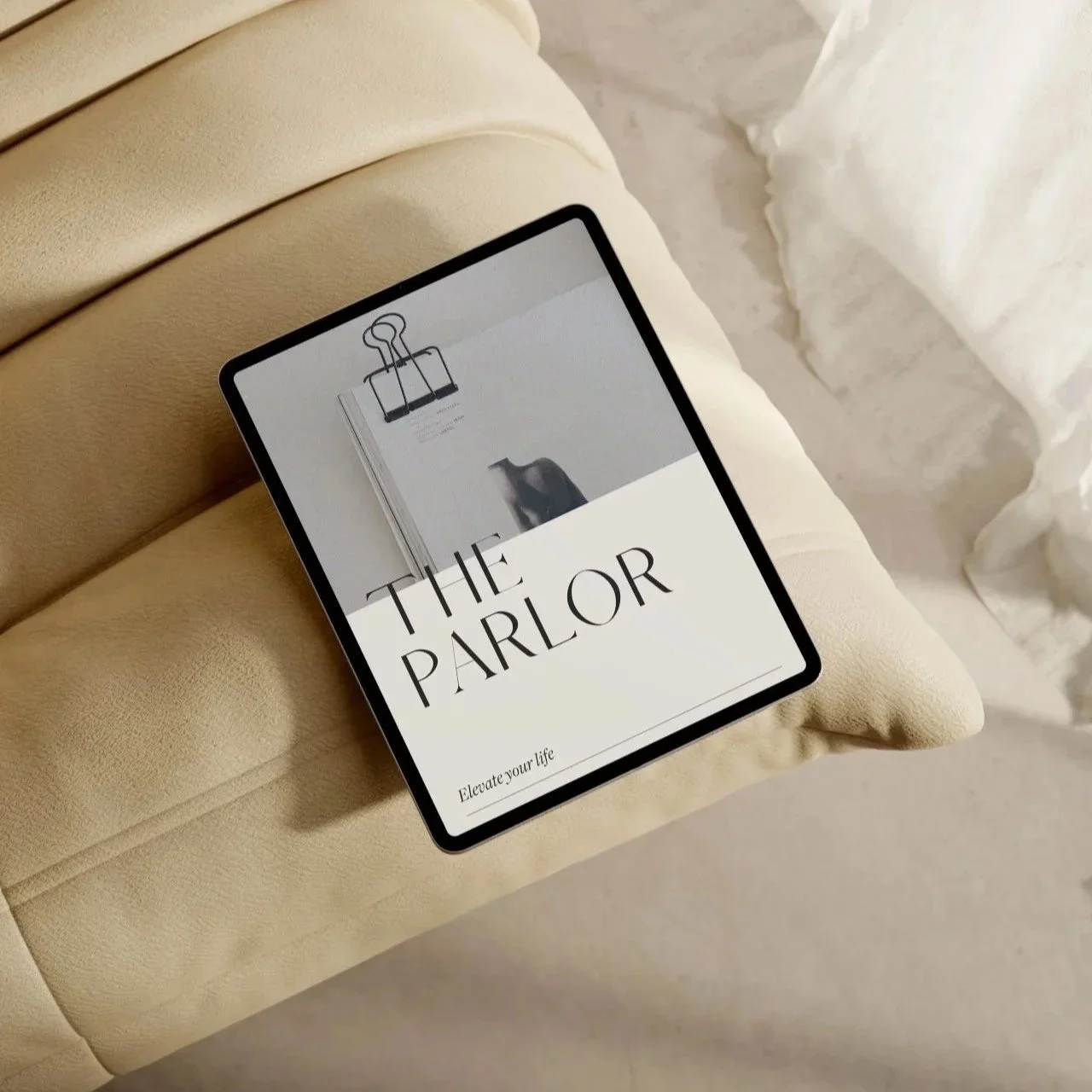
Join The Parlor
Explore thoughtful perspectives, aesthetic inspiration and exclusive resources in our private digital salon.
A brief history of luxury
Luxury did not originate as a matter of wealth or consumption. In its earliest expressions, it was closely bound to the sacred. Across ancient civilizations, the rarest materials and the highest forms of craftsmanship were reserved for ritual, worship, and communion with the divine. Gold, incense, fine textiles, stone, and intricate ornamentation were not valued for personal indulgence, but for their symbolic power.
What was scarce or required exceptional effort or skill to create or extract was considered worthy of reverence. Luxury, in this sense, functioned as a visible expression of respect—for the gods, for the cosmos, and for what lay beyond ordinary life. As societies grew more hierarchical, this language of sacred refinement migrated from temples to courts.
Monarchs and ruling classes adopted the symbols and materials once associated with the divine to signal authority, legitimacy, and proximity to higher order. Luxury became a marker of power and distinction, no longer pointing upward toward transcendence, but outward toward social hierarchy. While craftsmanship remained central, the meaning shifted—from reverence to rank.
With the advent of industrialization and mass production, luxury underwent another transformation. Goods once rare became increasingly accessible, and luxury was redefined in economic terms. In modern consumer culture, luxury became synonymous with status signaling, competition, and display—completely detached from its ancient associations.
This evolution helps explain the confusion surrounding luxury today. When severed from its deeper origins, luxury can feel hollow, excessive, or morally ambiguous. Yet historically, luxury was never meant to be purely material. Its earliest purpose was to elevate our consciousness. The philosophy of luxury is not a reinvention, but a return toward luxury as discernment, reverence, and thoughtful engagement with life.
The psychology behind luxury
Psychological research shows that how people relate to luxury is shaped by emotional, social, and self-related processes, not just economic capacity. One key dimension is the role of luxury in identity and self-expression. People often purchase or desire luxury goods because they help express a sense of identity, personal values, or social belonging. Brands and products with compelling narratives allow consumers to project desired self-images or to reinforce how they see themselves.
Luxury consumption also engages social motivations. Some psychological theories suggest that individuals use luxury goods to satisfy social goals such as acceptance, differentiation, or status signaling. When consumers anticipate that certain products will be seen as prestigious, this expectation influences their choices.
Researchers who study the psychology of luxury consumption find that people are often driven by a tension between internal values and external forces—the way luxury aligns with personal meaning versus how it is shaped by societal norms and marketing. Luxury can evoke powerful emotional responses precisely because it sits at this intersection of personal desire and collective definition.
Additionally, psychological research underscores that luxury goods often carry symbolic value beyond functional utility. People may associate luxury with higher emotional resonance, self-esteem, and experiential meaning, explaining why consumers sometimes choose luxury products even when they are not strictly rational from a purely utility-based perspective.
The psychology of luxury encompasses identity expression, social signaling, emotional satisfaction, and cognitive tension between self-concept and cultural influences. Understanding these underlying processes helps explain why luxury continues to captivate people across cultures and eras.

Principles of a luxury philosophy
To live luxuriously, in the philosophical sense, is to operate from a set of principles that elevates how you approach life. These principles guide daily decisions—informing what is both accepted and rejected. They are not external rules, but internal reference points that offer coherence. Over time, this alignment creates a life that feels more considered.
Luxury as Choice
Luxury begins where necessity ends. It emerges in the space where you are no longer purely reactive to circumstance, but able to make conscious selections. Even small choices—how you start the day, what you allow into your mental space, what you say yes or no to—shape the texture of life.
Luxury as Discernment
Discernment is the ability to distinguish between what is merely available and what is truly aligned. A luxurious life is not cluttered with excess commitments, possessions, or inputs. It is edited. This curation is not deprivation but mindful refinement.
Luxury as Reverence
To live luxuriously is to treat life with integrity—to recognize that time, energy, and attention are finite and valuable. Reverence extends into the rhythms of daily life, shaping how you think, speak, act, and relate to others. Luxury, in this sense, is a form of respect.
Luxury as Time
Time is the most fundamental luxury. Not simply an abundance of it, but its quality—unrushed, uninterrupted, and whole. A truly luxurious life protects this sense of temporal sovereignty, prioritizing rhythms that allow for presence rather than perpetual urgency.
Luxury as Peace
Luxury is the presence of inner calm. It is a life no longer governed by internal conflict and misalignment. Peace is not passive—it is the outcome of living in accordance with your values, with minimal friction between intention and action.
Luxury as Autonomy
Perhaps most importantly, luxury is the capacity to author your own life. It resists inherited scripts and external pressures in favor of internally defined values, shifting the focus to what matters most. This authorship is subtle, but powerful.
How to live a luxury lifestyle?
The luxury lifestyle is not a one-size-fits-all concept, but a personalized expression of the philosophical principles. At its core, it involves the intentional pursuit of high-quality behaviors, experiences, possessions, and surroundings that elevate your standard of living. While material possessions play a role, they are just a fraction of the equation. The luxury lifestyle is a symphony designed to cater to your unique desires.
Quality over Quantity
Quality is the hallmark of luxury, and this principle extends across all aspects of life. A luxurious life is edited and defined by the deliberate selection of what is resonant and enduring. This principle extends beyond material choices into relationships, obligations, and the environments you occupy. By favoring substance over surplus and depth over breadth, life feels richer.
Considered Experiences
A luxurious approach to experiences is not defined by spectacle or expense, but by presence and depth of attention. When special moments are thoughtfully designed, they convey a particular gravitas that imprints itself on your memory rather than dissipating. Regardless of scale or setting, what distinguishes such experiences is intentionality. They need not be grand, but they should be felt and capable of enduring beyond the event itself.
Expression and Individuality
The luxury lifestyle serves as a canvas for self-expression, allowing you to manifest your unique tastes and preferences. It creates space for your aura to emerge organically, through choices that reflect your inner standards rather than prevailing trends. It is not performative or declarative, but genuinely lived. The details you prefer and the rituals you maintain become natural extensions of who you are.
Wellness and vitality
Well-being is not an accessory to a luxurious life; it is one of its central pillars. Beyond material considerations, a truly luxurious way of living places sustained value on physical, mental, and emotional health. Energy, clarity, and vitality are regarded as resources to be protected rather than expended carelessly. In this sense, balance is an intrinsic condition of living well.
Freedom and sovereignty
In an era defined by speed and constant demand, mastery over time has become the rarest form of wealth. Those who live with discernment understand the importance of savoring rather than rushing and inhabiting rather than consuming. At its essence, luxury depends on autonomy. When time is reclaimed and respected, it becomes one of the clearest measures of a life well lived—defined by attention versus achievement.

Elevate Your Life
Explore our luxury advisory program for accomplished individuals desiring a more intentional way of living.
What luxury living is not
As luxury has become more visible in modern culture, it has also become more misunderstood. When stripped of its philosophical grounding, it is often mistaken for outcomes it does not reliably produce, or motivations that ultimately undermine it. To understand luxury clearly, it is just as important to define what it is not.
Social Signaling
Luxury is frequently mistaken for a language of status—a means of broadcasting success, wealth, or superiority without explanation. While visible markers of success can accompany a luxurious life, they are not its foundation.
When luxury is pursued primarily for external recognition, it tends to distort judgment. Decisions become driven by appearance rather than alignment, often leading to overextension, unnecessary consumption, or financial strain. What may resemble wealth on the surface can conceal fragility beneath it.
A life shaped by luxury is inwardly governed. It does not depend on approval or comparison. When outward validation becomes the motive, luxury dissolves.
Endless Ambition
Luxury is sometimes framed as a reward structure—a distant prize meant to incentivize ambition. While aspiration has its place, treating luxury as a future justification for present deprivation misunderstands its nature.
Luxury is not a substitute for purpose, nor is it something that must be earned through exhaustion. When reduced to a motivational tool, it risks becoming hollow: a symbol chased rather than a condition lived. True luxury does not sit at the end of striving. It shapes the quality of effort, not merely the outcome.
Excessive Accumulation
Another common misconception is that luxury is synonymous with acquiring more—more comfort, more convenience, more indulgence. But accumulation without discernment does not to richness, but to saturation.
Luxury does not attempt to elevate everything indiscriminately. It selects. It edits. It refines. Without restraint, abundance becomes noise, and excess erodes the very ease luxury is meant to provide. A luxurious life is not measured by how much is owned, but by how little is required to feel fulfilled.
Adopt the luxury philosophy
Luxury, as a philosophy, is not confined to circumstance or means. It remains accessible because it is not rooted in acquisition, but in perception—an attunement to what is truly valuable. At its core, it reflects a sensitivity not only to what is well made, but to what is well chosen and well lived.
Luxury takes many forms: objects shaped by skill, experiences shaped by intention, and less tangible dimensions such as time, autonomy, and inner ease. To appreciate the finer aspects of life does not require material fixation. When understood philosophically, it refines rather than overwhelms. To clarify this orientation, it is worth stating plainly:
Luxury is not excess.
Luxury is not money.
Luxury is not pretension.
Luxury is choice.
Luxury is discernment.
Luxury is reverence.
These distinctions determine whether it becomes a source of clarity or contradiction in your life.
What follows is a curation of luxury resources that position it as a lived philosophy—examined through principles, practices, and perspectives that translate abstraction into conduct. These resources are compiled to help improve judgment. As luxury is not an end goal but lifelong practice.
Elevate Your Life (Viveura)
Embark on a guided experience to design a life of intention—with a curriculum rooted in refinement and discernment. Here you’ll learn how to turn your life into a masterpiece of bespoke moments tailored to your distinct tastes and personal preferences.
Of Refinement in the Arts (Hume)
A foundational philosophical essay examining how taste, judgment, and refinement develop within societies. Hume explores the conditions under which standards of excellence emerge, arguing that refinement is cultivated through experience, education, and shared cultural norms rather than innate superiority. This text provides an early philosophical framework for understanding luxury as discernment rather than indulgence.
A Philosophy of Luxury (Weising)
This work situates luxury within social theory, analyzing it as a cultural system shaped by symbolism, distinction, and collective meaning. Rather than treating luxury as material excess, it frames it as a structured language through which societies express values, hierarchy, and aspiration. The text is useful for understanding luxury as a social and philosophical construct rather than a market category.
Luxury, and How It Became Common (New York Times)
This article traces the historical shift of luxury from rarity to ubiquity, examining how industrialization, globalization, and mass production altered its meaning. It highlights the tension between exclusivity and accessibility, offering insight into why luxury today often feels diluted or ambiguous. The piece provides important cultural context for contemporary debates around value and distinction.
The Fascinating History of Luxury Design (Fast Company)
A design-focused exploration of how luxury aesthetics and craftsmanship have evolved over time. The article emphasizes innovation, materials, and form, showing how luxury design reflects broader technological and cultural shifts. It is particularly useful for understanding how refinement manifests visually and materially.
The Complete History of Luxury (QZ)
A broad historical overview examining luxury across eras, cultures, and economic systems. The piece connects luxury to power, trade, and social organization, illustrating how its meaning has continually adapted to changing conditions. It offers a macro-level perspective that situates modern luxury within a long historical continuum.
The Definition of Luxury is Changing (Forbes)
This article analyzes how contemporary consumers are redefining luxury around values such as time, well-being, sustainability, and experience. It reflects a market-oriented perspective, showing how shifts in cultural priorities are influencing brand positioning and consumer behavior. Useful for understanding how philosophical ideas about luxury intersect with modern economics.
Nobody Knows What Luxury is Anymore (QZ)
A critical examination of the conceptual confusion surrounding luxury in the present moment. The article questions whether luxury still functions as a meaningful category, given its overuse and commodification. It serves as a counterpoint to traditional definitions and underscores the need for clearer philosophical grounding.
What Does Luxury Mean Now? (BBC)
A cultural analysis exploring how luxury is perceived across different demographics and regions today. The piece considers generational shifts, ethical concerns, and changing aspirations, positioning luxury as an evolving idea rather than a fixed standard. It complements more theoretical readings by grounding the discussion in contemporary social realities.