How to Speak Eloquently

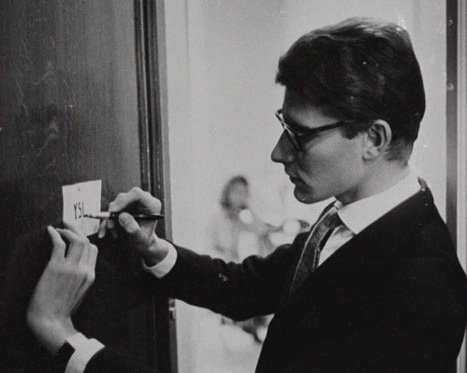
Public Domain Image of David Bowie
The ability to communicate effectively is a skill set everyone needs but many lack. Here are simple tips to become more articulate.
Eloquence is the art of articulation. It is the practice of using language efficiently and effectively to express ideas, shape perception, and influence outcomes. The way we speak determines how we are understood, how we are remembered, and how much trust we are granted.
Eloquence allows ideas to land cleanly rather than defensively, and invites cooperation rather than resistance. It is a critical life skill that underpins healthy relationships, strong leadership, and personal agency. To speak eloquently is to communicate in a way that feels composed rather than forceful. It delights rather than overwhelms. It encourages others to listen, engage, and align.
We live in an era of constant communication and diminishing attention. Conversation is often fast, reactive, and cluttered with excess explanation, filler language, and emotional leakage. Speaking quickly is frequently mistaken for competence; speaking often is confused with having something meaningful to say.
In this environment, eloquence has become rare—and therefore more valuable. Historically, articulate speech was closely associated with elegance, competence, and distinction. Those who spoke well were regarded as elevated and, as a result, were entrusted with greater consideration, influence, and opportunity.
Today, the same principle applies. Clear communicators are perceived as more capable, more credible, and more sensible. Their words tend to carry more weight, and their message is taken seriously. In professional and personal contexts alike, articulate speech continues to function as a signal of sophistication and social intelligence.
In contrast, excessive explanation, verbal urgency, or constant commentary often undermines authority and weakens influence. Eloquence is not about speaking more — it is about speaking better. And in a noisy world, restraint is its own form of power.

Start Thriving Now
Subscribe for free access to our digital salon of exclusive articles and premium resources on luxury and elevated living.
Integration
Speech isn’t just about exchanging information — it shapes social trajectory. Human interaction is shaped by language, and the clarity with which we express ideas directly impacts how our intentions are understood. Studies find that effective communication is not merely a nicety, but a measurable predictor of real-world outcomes. What follows are strategies to cultivate articulate communication — speech that is not merely heard, but genuinely understood and respected.
Hold back
Begin by holding back. You do not need to participate in every moment of a discussion. Whether in a meeting or a casual conversation, you are not required to share an opinion on every point as it arises. There is strength in allowing others to speak while you remain attentive, waiting until there is something you genuinely want—or need—to contribute.
As you wait, observe and listen closely. Engage your emotional intelligence by letting others’ words fully register before responding. This allows you to process what has been said and ensures that, when you do speak, your contribution builds naturally on the conversation rather than interrupting it. When the moment comes, resist the urge to interject. Allow the speaker to complete their thought before adding your own.
Often, the impulse to speak prematurely is driven by fear or ego: by the desire to be seen, acknowledged, or not overlooked. This leads to filling space with unnecessary commentary. Instead, remain composed. Wait until your words add clarity, direction, or value. Holding back until your contribution truly advances the conversation makes your speech more impactful and far more memorable.
Say less
Eloquence is rarely found in excess. Speaking well is less about volume and more about precision. Long explanations, unnecessary qualifiers, and repeated points often dilute the strength of what you are trying to convey.
Instead, aim for restraint. Express your idea plainly, then allow it to stand. When language is economical, it becomes easier for others to grasp your meaning and respond thoughtfully. Concise expression signals confidence; it suggests that you trust your point enough not to overwork it.
This does not mean withholding insight or oversimplifying complex ideas. It means resisting the impulse to over-explain in order to reassure yourself or anticipate objections. Trust that a well-formed thought, delivered succinctly, is sufficient.
When you practice saying less, your contributions become more focused and deliberate. Others are more likely to listen closely, not because you are saying more than everyone else, but because you are saying only what matters.
Slow down
Filler phrases such as uh, well, I mean, or you know are not inherently problematic. Used sparingly, they can soften speech and make it sound natural rather than rigid. Overuse, however, undermines articulation. It most often appears when someone feels rushed, uncertain, or has not yet clarified their own message.
This is where pace becomes essential. Eloquence is not measured by how quickly a point is delivered. While some individuals move effortlessly through discussions, responding to questions with apparent ease, this fluency is usually the result of familiarity, preparation, and experience. It is a skill developed over time, not a standard to force prematurely.
To cultivate this level of ease, begin by moderating your tempo. Give yourself a moment to think before responding. Introduce deliberate pauses rather than reaching for verbal placeholders. A brief silence, used intentionally, creates space for precision. It signals composure rather than hesitation.
Speaking more slowly allows ideas to take shape before they are expressed. It reduces verbal clutter and lends authority to what you say. In most situations, a measured response carries far more weight than a rapid one delivered without care.
Use structure
When you have the floor for more than a brief exchange, structure becomes essential. Framing what you say as a narrative helps guide others through your thinking and keeps attention anchored. Even in professional settings, people follow stories more easily than disjointed points.
For longer presentations or formal discussions, a simple framework can provide clarity. One commonly used model in business communication is SAR. This approach allows listeners to understand not only what you are saying, but why it matters:
Situation – establish the context or background
Action – explain what has been done, or what should be done
Result – outline the outcome or expected impact
In more casual settings, a lighter structure works just as well. Organizing your thoughts into three clear points—signposted with phrases such as first, then, and finally—helps you stay oriented while making it easier for others to follow along. This sequencing reduces the likelihood of losing your place and keeps your audience engaged.
Regardless of the framework you choose, the objective remains the same: move through your ideas with intention and order. Introduce your structure at the outset so listeners know where you are headed, and close by briefly revisiting your main points. A clear beginning and a clean conclusion ensure your message lands as intended.
Be expressive
Some of the most compelling communicators are those who convey feeling through both language and gesture. They engage others not by exaggeration, but by allowing emotion to inform their delivery. Without becoming theatrical, expressive communication can significantly enhance influence in both personal and professional settings.
One way to develop this skill is by expanding your vocabulary. Cultivate a working repertoire of descriptive language that allows you to illustrate ideas more vividly. These words need not be elaborate or ornate; they should simply be precise and evocative. Consider the difference between saying “it was really good” and “it was an unexpected feast filled with delicacies that delighted my taste buds” when describing a memorable dinner. The latter creates imagery and invites the listener into the experience.
That said, eloquence depends on discernment. Rich description should enhance meaning, not obscure it. Avoid overloading sentences with complex or ornamental language, which can confuse listeners or come across as pretentious. Pithiness is far more persuasive than excess.
Expression is not limited to language alone. Physical cues—facial expression, posture, and gesture—can reinforce what words cannot fully convey. Allow your body to support your message by aligning it with your emotional stance. A smile when recalling delight or a measured stillness when discussing something serious adds dimension and credibility to what you say.
When speaking without visual cues, such as on the phone or during audio-only meetings, vocal modulation becomes especially important. Varying tone and pitch helps signal emphasis and intent. A flat, unmodulated delivery offers little guidance to the listener and diminishes engagement, regardless of how thoughtful the content may be.
Know your audience
Eloquence is never one-size-fits-all; it begins with a clear understanding of who is in front of you. Every room carries its own energy, every conversation unfolds within a specific context, and every audience listens differently. To communicate well is to attune yourself to these conditions—recognizing what matters most to those present, where clarity is required, and what outcome they are hoping to reach.
This level of awareness goes beyond surface observation. Senior leaders often look for synthesis: clear implications, trade-offs, and direction. Creative teams may respond more readily to imagery, storytelling, and possibility. Technical audiences tend to value order, evidence, and logical progression. Adjusting to your audience does not require abandoning your voice; it asks that you revise the mode so your ideas arrive intact.
One useful discipline is to pause and consider three questions before you speak: Who am I addressing? What do they most need to grasp or take away? And what single idea should remain with them afterward? When your communication is oriented toward the listener, eloquence shifts from display to alignment—and language becomes a point of connection rather than performance.
Choose precise words
There is a quiet luxury in clarity. The most eloquent communicators are not those who use the most language, but those who select exactly what is needed. Precision carries power: it cuts through distraction, holds attention, and signals respect for the listener’s time. Vague modifiers can be replaced with concrete nouns, filler phrases with restraint, and passive constructions with verbs that convey intention.
Language has the power to elevate even ordinary statements. Rather than saying something is very important, call it essential. Instead of kind of helps, say it accelerates progress. This discipline of refinement strengthens credibility and gives each sentence a sense of purpose. Specifics—numbers, names, and tangible examples—tend to resonate more clearly than abstractions.
One useful practice is to cultivate a personal lexicon: a considered collection of words and phrases that feel both authentic and exact. Approach speech as you would polished writing—edit mentally, remove excess, and emphasize what matters most. Speaking with precision is not about impressing others; it is about revealing clarity. And clarity, when consistently expressed, is unmistakably magnetic.
Own your delivery
Before a single word is spoken, your presence has already made an impression. Eloquence is carried as much by your poise as it is by your voice. A grounded stance, an even breath, and measured gestures communicate confidence long before you open your mouth. To speak well is to inhabit stillness and let calm become your foundation.
Delivery is not about performance but rhythm. Pauses can be as eloquent as phrases, silence as powerful as speech. Allow your tone to rise and fall naturally, creating texture in the ear of the listener. Use your hands and eyes not as decoration but as punctuation, underlining key points with intention rather than distraction.
Rituals help. Take two slow breaths before beginning. Memorize your opening line so you can step into the moment with certainty, and choose your closing line so you know exactly where you are guiding the room. Record yourself occasionally to study your patterns: posture, pace, and fillers. Refinement over time allows your delivery to become not only effective but effortless.
Close with clarity
An eloquent conversation, like a well-composed symphony, deserves a graceful conclusion. Too often, people let their words trail into vagueness, leaving listeners uncertain of the core message. Closing with clarity means landing with intention—summarizing your central idea in one line that feels distilled and memorable. If nothing else is retained, this line must carry the essence.
Equally important is the ask. Whether you are persuading, proposing, or presenting, eloquence requires direction. Frame the next step with elegance but firmness: here is my recommendation, why it matters, and what should happen next. Clarity is not force; it is a gift, sparing others the labor of interpretation and ensuring momentum is not lost.
Finally, allow your ending to breathe. A poised pause, a gracious thank you, or even a reflective silence can leave more weight than another string of words. And when appropriate, follow up with a simple written recap to anchor decisions and timelines. To close with clarity is to show respect—for the moment, for your message, and for the people entrusted to carry it forward.






Reflections
When do I feel most articulate—and when do I lose clarity? Identify patterns across environments, people, or emotional states.
What do I tend to over-explain, and why? Explore whether reassurance, fear of being misunderstood, or habit is driving excess language.
Whose speech do I admire, and what specifically makes it compelling? Is it pace, restraint, vocabulary, confidence, or structure?
What conversations would improve if I spoke less—but more deliberately? Consider professional, social, or intimate settings.
What words or phrases feel most authentic to me when I am calm and self-possessed? Begin identifying your personal lexicon.
How do I currently use silence? As discomfort, avoidance, or intention? How could I leverage it better?
What would change in my life if my words consistently carried more weight? Reflect on relationships, leadership, boundaries, and self-trust.
Resources
The Art of Public Speaking — Dale Carnegie
A foundational guide to persuasive speech that emphasizes preparation, clarity of thought, and sincere connection with an audience as the basis of effective public speaking.
10 Tips for Improving Your Public Speaking Skills — Harvard Professional Development
A practical overview of evidence-based techniques for improving confidence, structure, and delivery in public speaking across professional contexts.
How to Talk to Yourself — Psyche
An exploration of how intentional self-talk can clarify thinking, regulate emotion, and improve decision-making and communication with others.
How Language Shapes the Way We Think — TED Talk by Lera Boroditsky
A cognitive science perspective on how the language we use influences perception, memory, and thought patterns, shaping how we understand the world.
On Speaking Well: How to Give a Speech with Style, Substance, and Clarity — Peggy Noonan
A refined guide to speechmaking that focuses on discipline, restraint, and moral clarity as the foundations of compelling communication.
The Elements of Style — Strunk & White
A concise manual on written clarity that champions simplicity, precision, and economy of language as timeless principles of good style.
About Viveura
Viveura is a cultural and philosophical publication offering thoughtful perspectives and aesthetic inspiration on the art of living well. If our work resonates, we invite you to support its continuation.
Our ideas exist outside ad-driven media cycles and are not optimized for virality or volume. Rather than relying on algorithms, Viveura is sustained through relationships with the readers, patrons, and partners who believe in our mission.
The Archive is the primary home and intellectual core of our publication. There you’ll discover a repository of evergreen essays and definitive guides on luxury, beauty, society, identity, and prosperity.
The Parlor is our digital salon and social destination hosted on Substack. Upgrade or become a patron to unlock a deeper layer behind our articles via exclusive syllabi, curated resources, guided prompts, and bonus workbooks.
The Course is an immersive study on how to elevate your life. Enroll to access a comprehensive curriculum that helps you design a conscious luxury lifestyle tailored to your distinct tastes and personal preferences.